Course Description
The BCCC is delivered over a span of six intensive training days and is suitable for those seeking certification for employment, self-employment, or insurance qualification purposes. The curriculum emphasizes hands-on caregiving skills, professional ethics, and the importance of empathy and communication in caregiving roles.
Graduates are well-prepared to provide care in a variety of settings, including private homes, assisted living communities, and long-term care facilities.
Who Should Enroll?
This course is ideal for:
- New caregivers entering the profession for the first time
- Experienced caregivers looking to refresh or formalize their skills
- Individuals meeting insurance requirements for private or long-term care coverage
- Family members providing care for loved ones at home
- Self-employed/private duty caregivers seeking to legitimize their services
- Veterans and their families requiring certification for benefits
- Job seekers aiming to boost their credentials and employability
- Aspiring caregiving business owners
- Caregivers fulfilling CEU (continuing education unit) requirements
- Volunteers and community health workers
Note: The American Caregiver Organization (ACO) grants 200 hours of in-class credit upon successful completion of this course.
Course Topics and Modules
The BCCC covers a broad and practical range of topics to ensure caregivers are prepared to handle daily caregiving responsibilities with confidence, competence, and compassion.
- Understanding Residents’/Clients’ Rights
- Respecting dignity, privacy, and autonomy
- Promoting client choice and independence
- Understanding legal rights and responsibilities
- Professional Introduction and Communication
- How to professionally introduce yourself to residents/clients
- Building trust and rapport with clients and families
- Using appropriate tone, body language, and terminology
- Ethics and Prevention of Abuse
- Recognizing signs of abuse, neglect, and exploitation
- Reporting procedures and legal obligations
- Creating a safe, supportive environment
- Communication Skills
- Verbal and non-verbal communication techniques
- Communicating effectively with residents who are:
- Blind or visually impaired
- Deaf or hearing impaired
- Living with Alzheimer’s or cognitive impairments
- Infection Control and Prevention
- Hand hygiene and use of personal protective equipment (PPE)
- Infection prevention in daily care routines
- Understanding transmission and containment protocols
- The Aging Process
- Physical, emotional, and mental changes with aging
- Sensitivity to age-related challenges
- Supporting dignity and independence in older adults
- Dementia and Alzheimer’s Care
- Understanding dementia and Alzheimer’s progression
- Behavior management techniques
- Communication strategies for cognitive impairment
- Caring for Non-Responsive or Non-Verbal Clients
- Providing care for clients unable to direct their own care
- Observing and interpreting non-verbal cues
- Ensuring safety, comfort, and respect
- Social and Recreational Support
- Planning meaningful social and leisure activities
- Encouraging engagement and preventing isolation
- Tailoring activities to cognitive and physical abilities
- Assisting with Activities of Daily Living (ADLs)
Essential care techniques that support daily function and hygiene, including:
- Oral care (for both conscious and unconscious clients)
- Bathing and personal hygiene
- Hair care and grooming
- Dressing and toileting
- Feeding and mobility assistance
- Skin Care and Bed Sore Prevention
- Turning and repositioning techniques
- Use of cushions and pressure-relief devices
- Monitoring and documenting skin conditions
- Service Plan Development
- Conducting needs assessments
- Creating individualized care plans
- Collaborating with clients, families, and healthcare providers
- Nutrition, Hydration, and Meal Services
- Understanding dietary requirements and restrictions
- Preparing and serving balanced meals
- Monitoring fluid intake and hydration levels
- Vital Signs Monitoring
- Measuring temperature, pulse, respiration, and blood pressure
- Recognizing abnormal readings and when to report
- Medication Assistance
- Understanding different medication types
- Assisting with self-administration of medications
- Recognizing side effects and adverse reactions
- Documentation and Record-Keeping
- Maintaining accurate care logs and reports
- Confidentiality and HIPAA compliance
- Communication with healthcare professionals
- Risk Management and Fall Prevention
- Identifying hazards in the home or care facility
- Safe transfer and ambulation techniques
- Use of assistive devices (e.g., walkers, gait belts)
- Emergency Preparedness
- First aid basics and wound care
- Fire safety protocols
- Responding to common emergencies (falls, choking, seizures)
Certification Outcome
Upon successful completion, participants will:
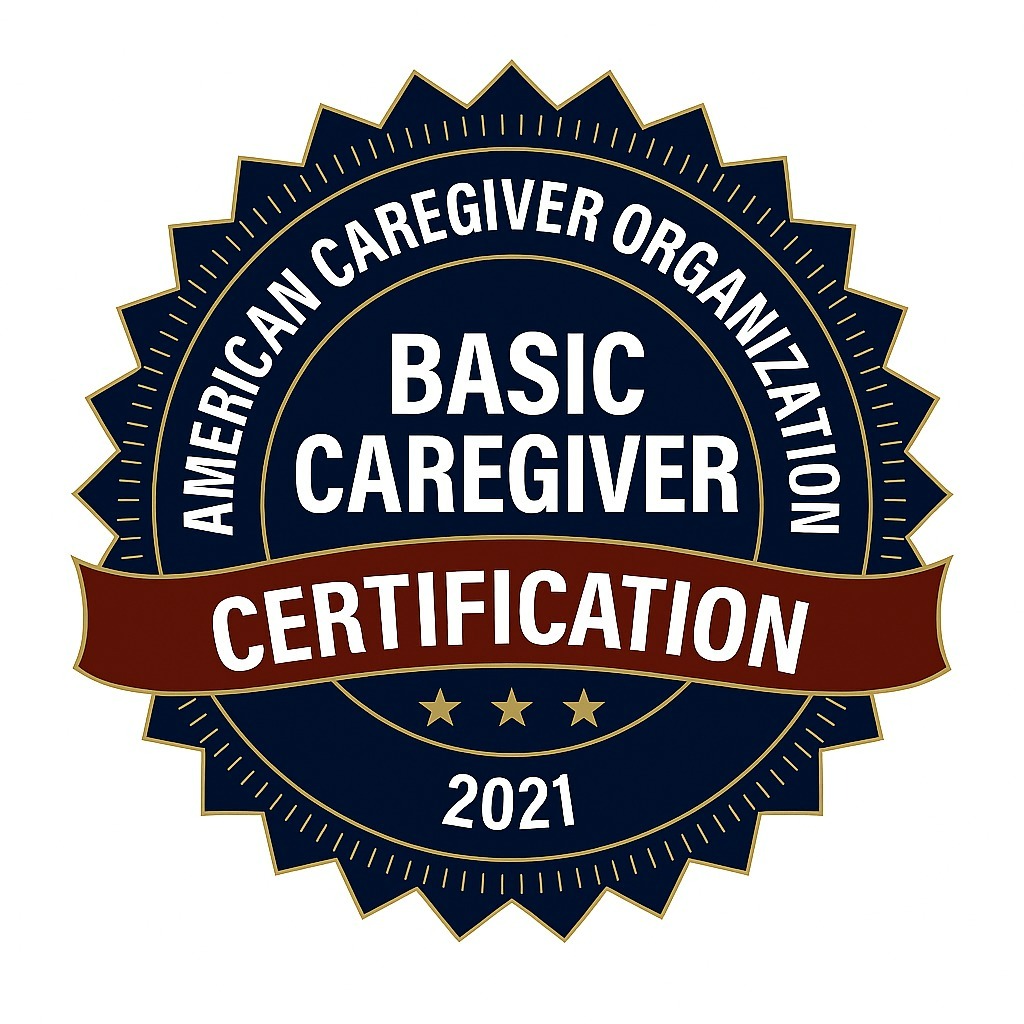
- Receive the Basic Caregiver Certification
- Earn 200 hours of in-class credit from the ACO
- Be qualified to work in various caregiving roles
- Be better positioned for advanced training or career advancement